

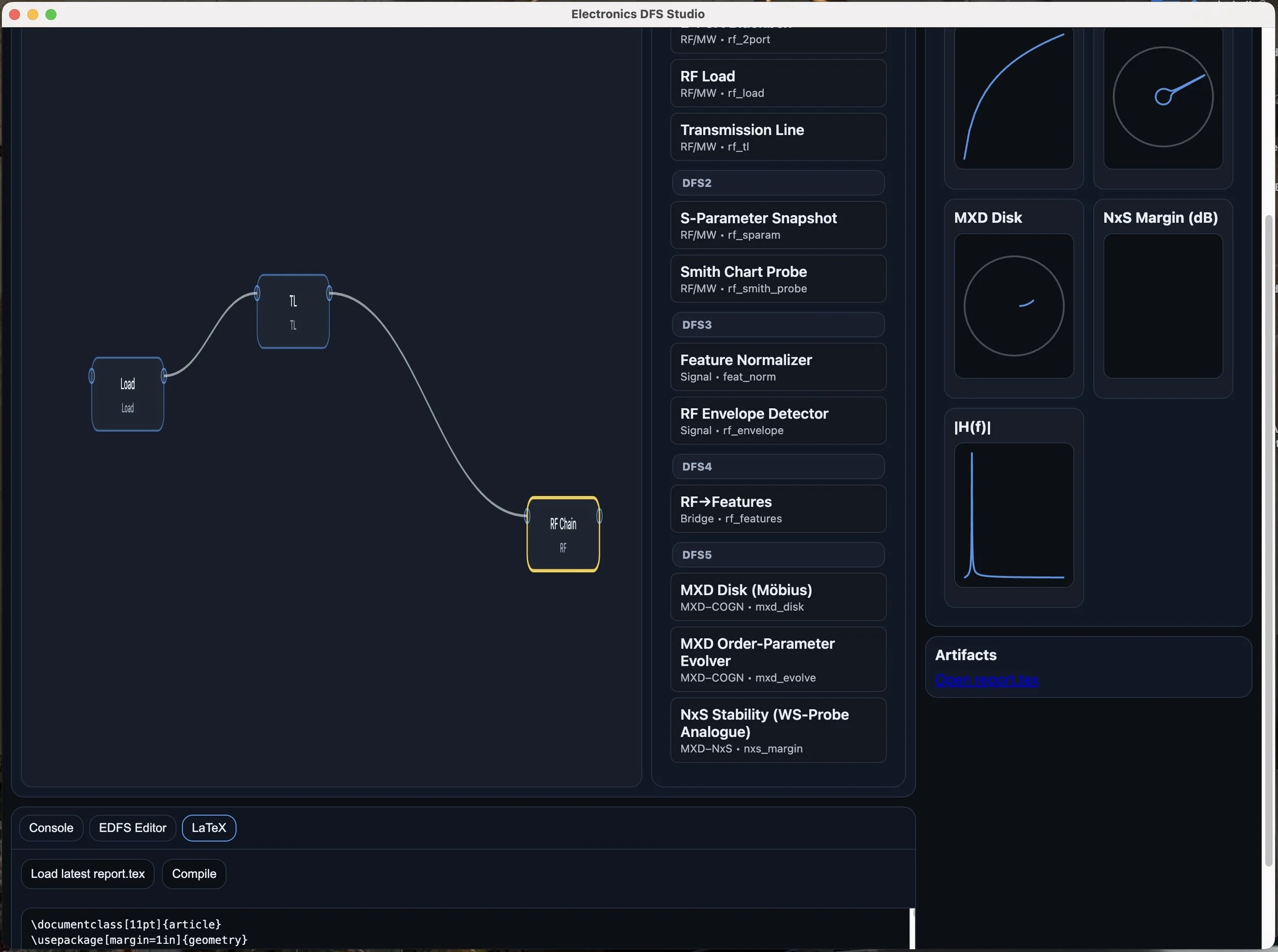
Electronic Design Flow Studio (EDFS): Deformation-Controlled Operator Inference & Graph-Compiled Numerical Execution
The Electronic Design Flow Studio (EDFS) showcases a graph-based design methodology grounded in the MXD-COGN coherence engineering framework. Rather than conventional linear pipelines, this design studio uses deformation-controlled operator inference to quantify structural change in complex systems, and graph-compiled numerical execution to implement modular, scalable computation across interacting domains.
By representing design elements, operators, and inference pathways as interconnected graph constructs, EDFS enables engineers and researchers to navigate multi-domain complexities with clarity and precision. This resource highlights the core principles behind the design flow, discusses the role of operator inference in stability assessment, and demonstrates how graph-compiled execution supports flexible yet formal evaluation of system behavior.
Whether for research, teaching, or implementation, EDFS provides a practical demonstration of applying coherence engineering principles to real engineering workflows.
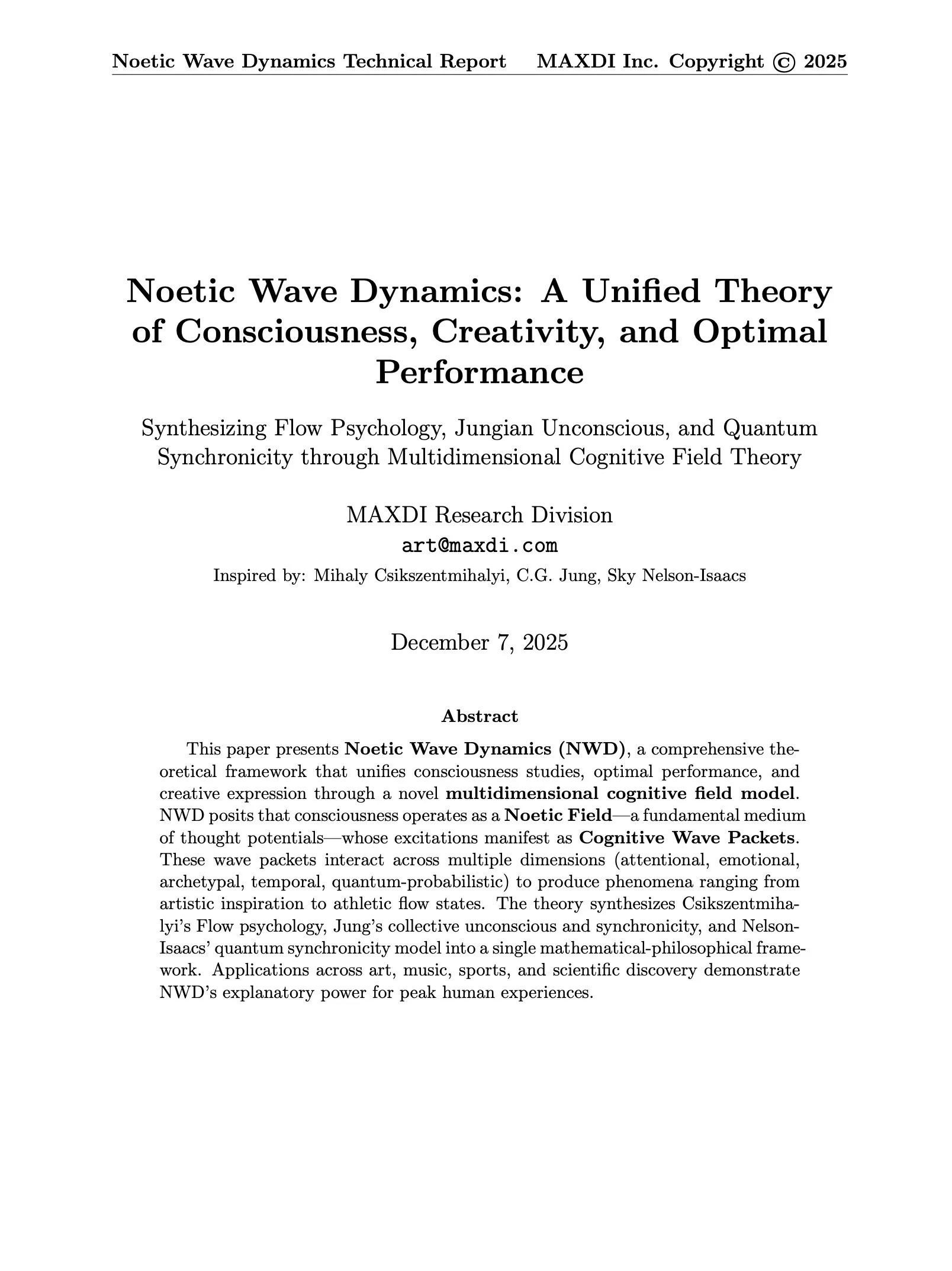
Noetic Wave Dynamics: A Unified Theoryof Consciousness, Creativity, and OptimalPerformance
Noetic Wave Dynamics: A Unified Theory of Consciousness, Creativity & Optimal Performance proposes a coherent, interdisciplinary framework that bridges cognitive science, dynamical systems, and coherence engineering. Rather than treating consciousness and creativity as separate phenomena, this research frames them as emergent states of structured inference and resonance within interacting system domains. Drawing on theoretical and analytical constructs from MXD-COGN, the paper outlines how optimal performance and noetic coherence arise at the intersection of cognitive flow, informational stability, and systemic ordering, offering a unified lens for understanding complex adaptive behavior in both human and engineered systems.
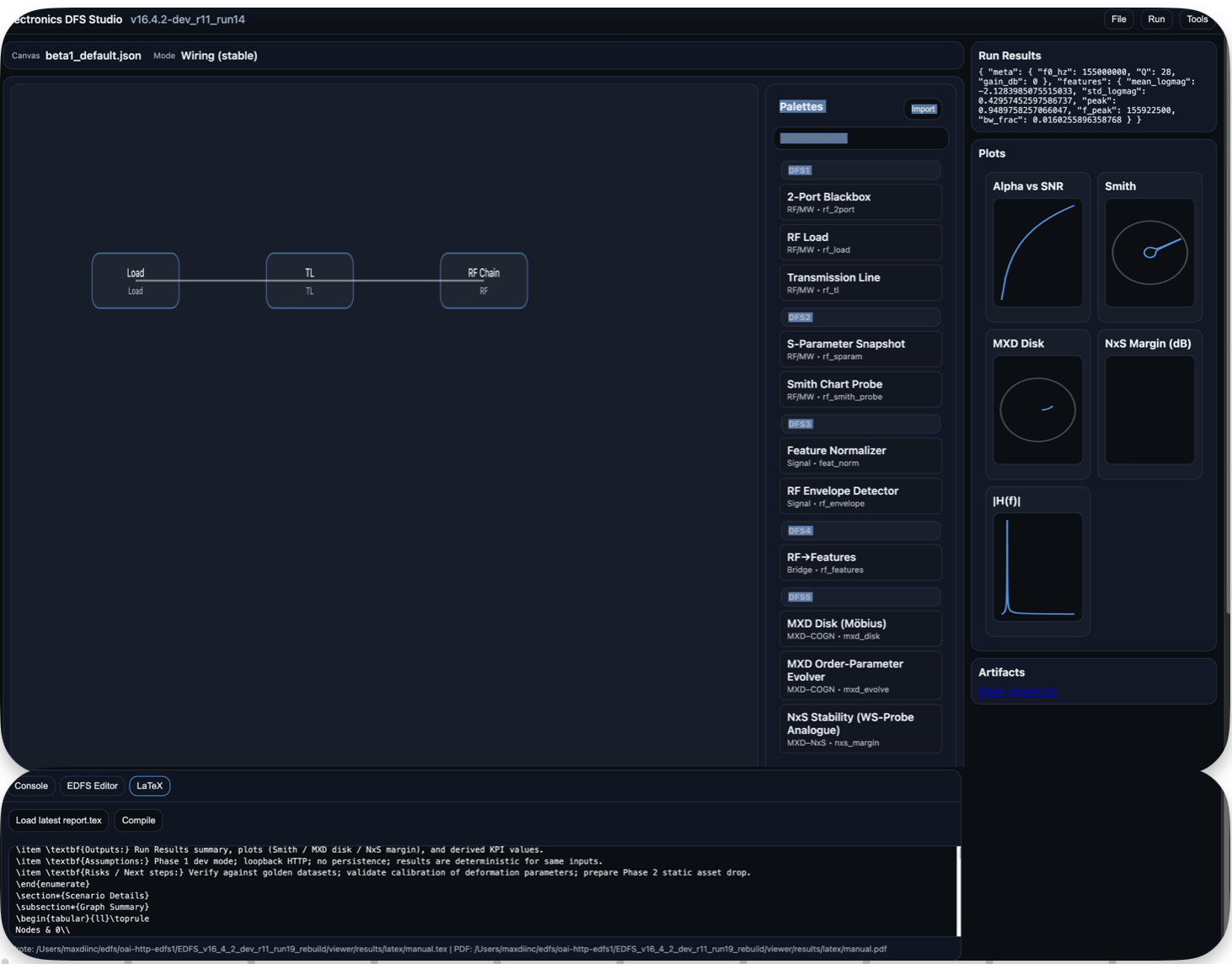
EDFS–MXD Demo Evaluation SDKGraph-Based Software Design Flow for Multi-Domain Systems
The EDFS MXD Demo introduces a graph-based software design flow and evaluation SDK developed within the MXD-COGN framework to support engineering across complex multi-domain systems. By modeling domain interactions and software components as interconnected graph structures, this demo illustrates how coherent design, modular evaluation, and systematic stability analysis can be embedded into engineering workflows.
This page highlights the core concepts of the design flow, including:
Graph representation of multi-domain interactions
Evaluation SDK components for modular analysis
Practical demonstration of system design iterations
Whether for research, teaching, or implementation, the EDFSMXD demo provides a hands-on example of applying coherence engineering principles to real-world software design challenges.
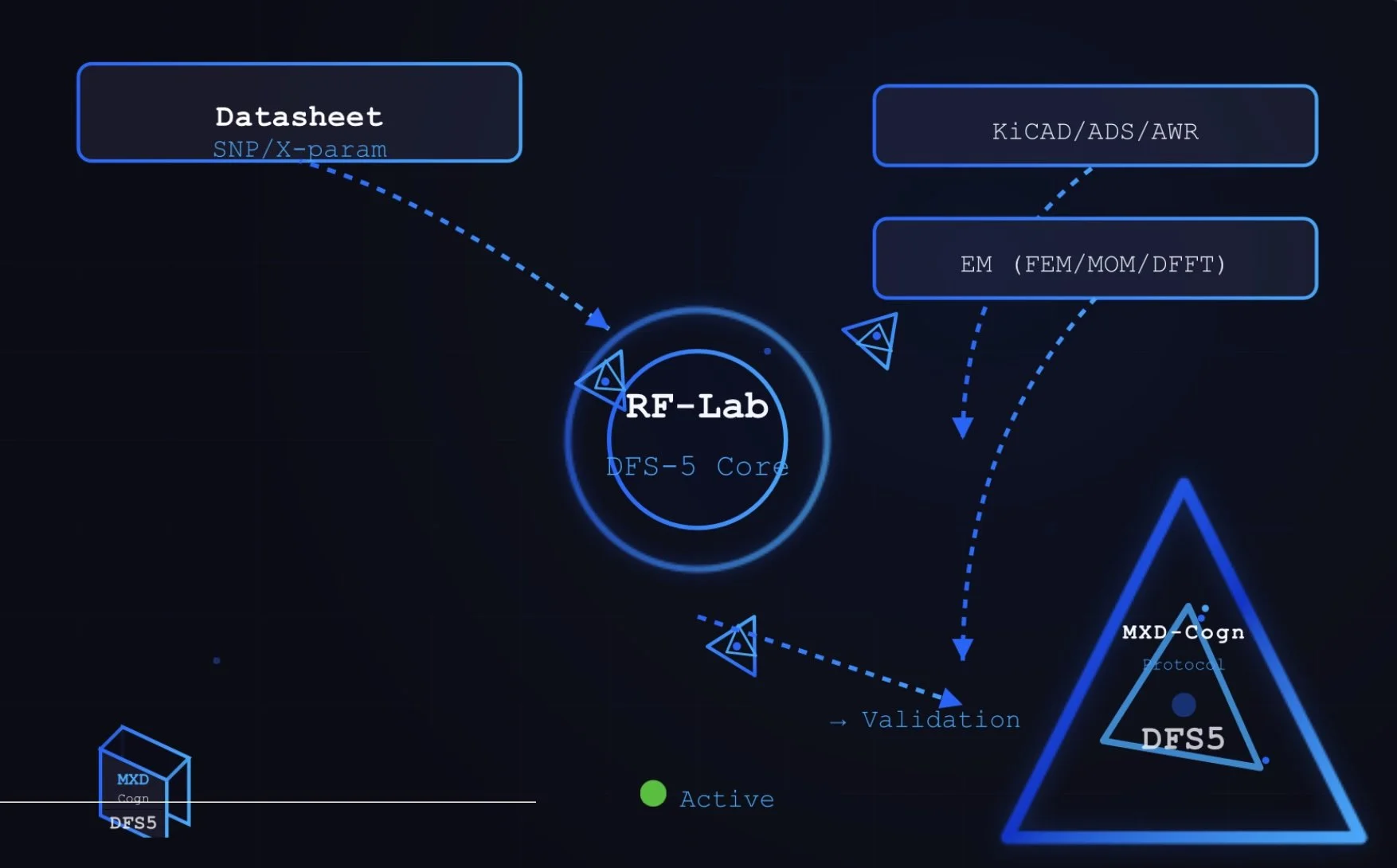
Graph-Native Design Flow for RF/MW Systems and Deformation-Based Inference
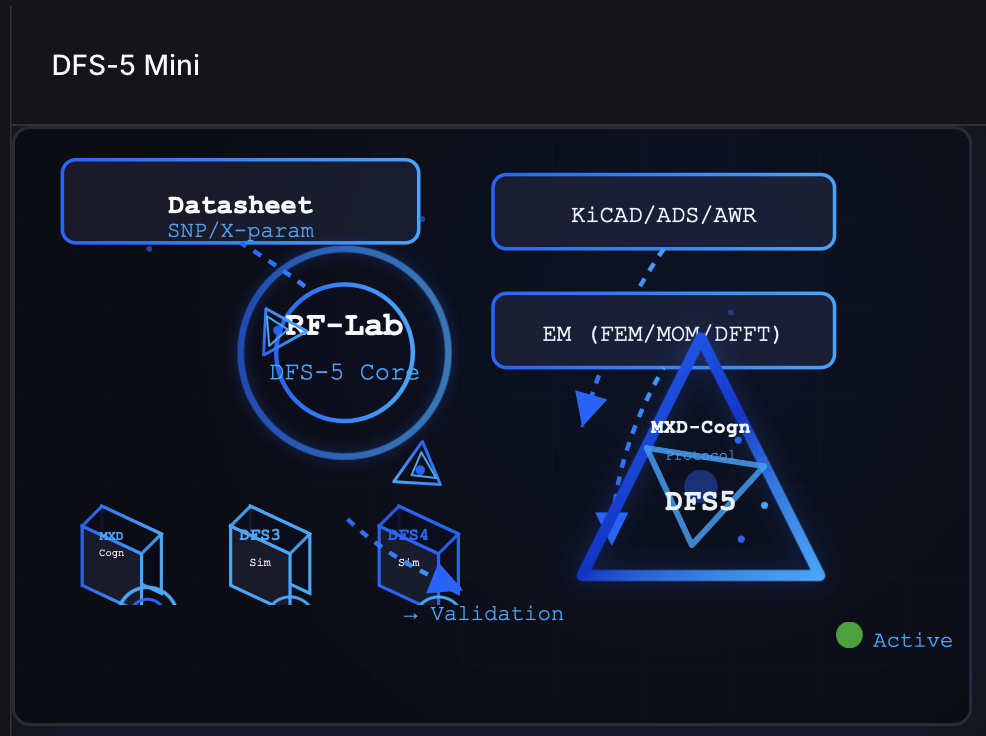
The Software Design Flow (SDF) presented in module EDFSMXD101 outlines a systematic approach for structuring and evaluating software design in multi-domain systems. Built on the MXD-COGN coherence engineering framework, this flow emphasizes modular graph-based representation, interaction interfaces, and deformation-controlled inference pathways. It highlights how complex engineering systems can be designed, analyzed, and iterated by capturing domain interactions, enforcing interface fidelity, and supporting scalable evaluation across heterogeneous components. This resource provides a foundation for practical workflows that align design structures with formal coherence criteria, enabling reliable performance and adaptable system evolution in multi-domain contexts.
NxS Stability Analysis: Beyond Probe-Based RFStability
The NXS Stability Analysis page presents an advanced approach to RF system stability that moves beyond traditional probe-based methods. Within the MXD-COGN coherence engineering framework, it introduces structural inference tools and graph-oriented diagnostics designed to quantify stability in complex multi-domain signal environments.
Instead of relying solely on point probe measurements, NXS analysis emphasizes coherence geometry, operator interaction modeling, and system-wide inference consistency to detect and characterize stability margins. This method provides engineers and researchers with deeper insight into instabilities that emerge from interacting subsystems, offering a more robust evaluation strategy for modern RF front-end and multi-domain signal processing systems.
Services: Simulation modeling analysis of electronics devices and systems.
Development: integration of hardware and software for RF/MW, Radar, telecommunications, quantum computing and photonics.
SW Products: EdFS — Electronics Design-flow Studio for Graph-native execution (ports + edges + topo sort), RF/MW + inference co-simulation, MXD Disk (inference-space analogue of Smith chart), Deterministic regression and baseline blessing and Offline-first, air-gapped friendly.
https://www.linkedin.com/company/maxdi-inc
https://www.linkedin.com/company/81940186
https://maxdi.com
https://cognitave.com
https://www.LinkedIn.com/in/maxdi
https://v3xoy.com
emails: >> mxd@maxdi.com | art@maxdi.com | law@maxdi.com | tex@cognitave.com | mxdvxoy@gmail.com